

Man/Woman/Chainsaw – Cannonball
Album review - vote 7.0
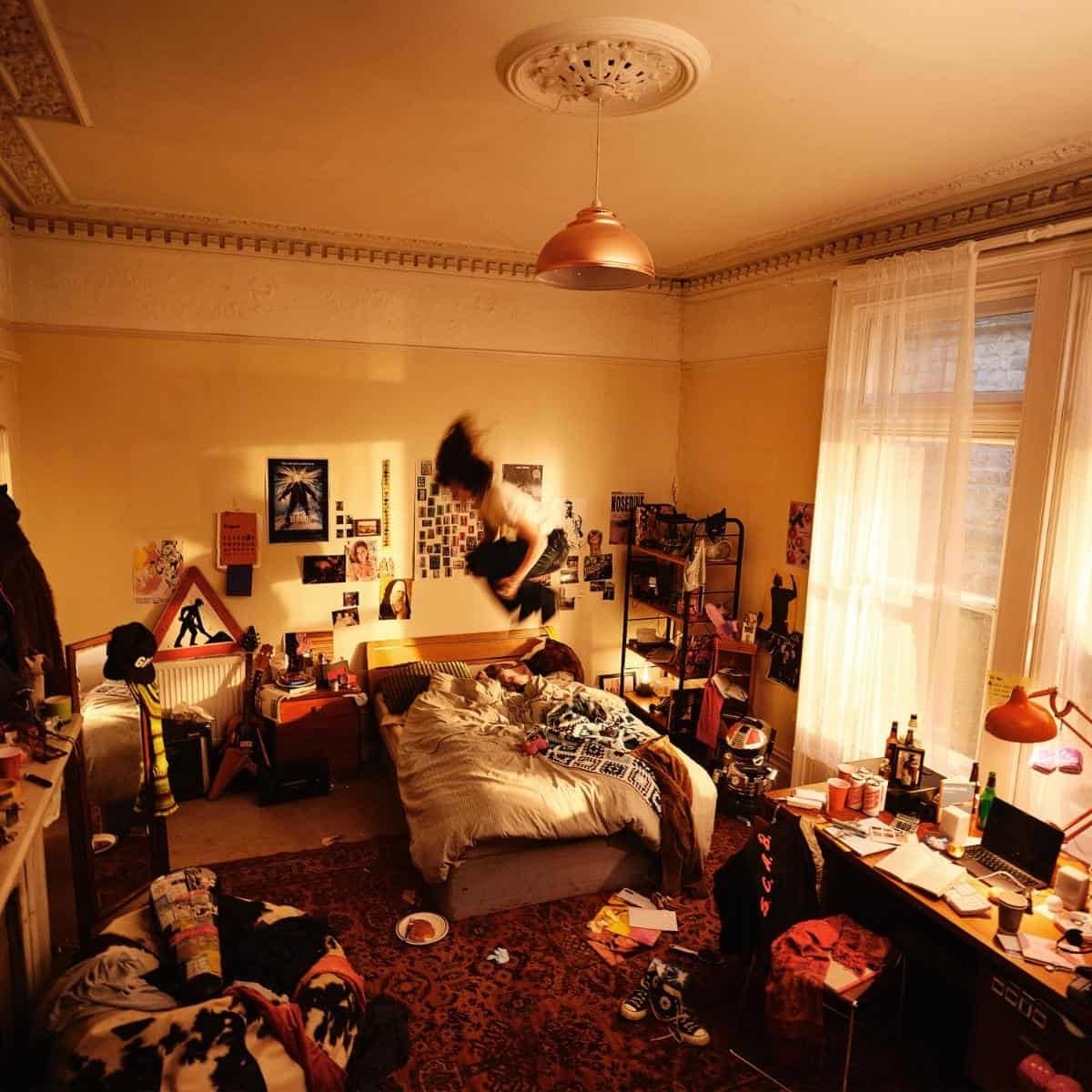
Six kids from South London who met each other in sixth form, when a “career plan” meant which pub would let you play a set on a Tuesday, and now they knock the hell out of every room they walk into. They spent years earning their stripes in converted vicarages and sweaty pub backrooms, notching up over a hundred gigs before most of them could legally get properly drunk, and it shows. Cannonball, their debut for Fiction, does not sound like a first album. It sounds like a band that already owns the place.
Forty one minutes, and inside there is everything at once. A violin that screams like it has a personal grudge against you, courtesy of Clio Starwood, who is not decorating these songs so much as detonating them. Guitars from Billy Ward and Billy Doyle that go straight for the teeth, Pink Floyd haze one minute and full post punk assault the next. A piano, played by Emmie-Mae Avery, that for two bars makes you think you have wandered onto some Adele or Alicia Keys record, all warm and unguarded, before the rug gets pulled and you are dragged into a proper brawl. Behind the desk are Seth Evans, who cut his teeth with black midi, and Margo Broom, who has worked with Fat White Family and Big Joanie, and you can hear that double hand in the way the chaos never quite tips over into mess.
Only Girl kicks the door open with a chorus that sticks in your skull like gum under a school desk, all sugar and swagger. From there the record keeps swinging between tenderness and total wreckage without asking your permission. Goddamn, Lizard Man! is a monster, all crunching power chords and a vocal from Ward that channels Nick Cave at his most theatrically menacing, a modern cousin of Red Right Hand for people who grew up doomscrolling instead of reading tabloids. Nosedive is the one built for festival fields, ticking synths that owe a debt to LCD Soundsystem and the nerdy euphoria of Los Campesinos, the kind of song that turns a crowd of strangers into a single sweaty choir. Then Lighter lets you catch your breath, soft and lounge lit, almost a jazz club moment, before Snakebite and Still Angry grab you by the collar again.
You can hear the years of pub gigs and sticky floors in every corner of this thing, the sweat has not dried off it yet. Bassist Vera Leppänen and Avery trade lead vocals with Ward like three different narrators fighting over the same diary, while drummer Lola Cherry holds the whole contraption together even when it threatens to fly apart, particularly on Canyons, which opens like a ballad and ends up somewhere closer to old school dEUS, all nerves and noise. There is a real feeling running through the record, love, spite, heartbreak, the kind of stuff you actually live rather than just write songs about.
If there is a fault, it is that some tracks seem to run out of road just when they are getting somewhere, like someone pulled the plug early because the tea was getting cold. A couple of ideas on the second half feel like sketches rather than finished paintings, and there are moments where you catch the shadow of Black Country, New Road hanging over the arrangements a little too clearly. But maybe that is exactly the point. You get the sense these six have not decided yet who they want to be, and that is precisely why you cannot stop listening. This is not a flawless record. It is a live one, messy and a bit reckless, and there are not many of those left worth caring about.